How can we help?
Complete the form to give us an overview of your needs and a member of our team will be in touch.
Complete the form to give us an overview of your needs and a member of our team will be in touch.

Download training material and documents for drivers, managers and other personnel.
ST&L Consultancy offers Bronze, Silver, and Gold transport compliance packages with audits, support, reports, and corrective action reviews. Higher tiers provide more frequent audits and enhanced support, with pricing based on package level and number of sites.
The document outlines EU driver hours and rest rules, including daily and weekly driving limits, mandatory breaks, and rest periods. It highlights transport managers’ responsibility for compliance and record-keeping, with examples of regular and reduced rest arrangements.
Safe vehicle loading requires using appropriate vehicles and securing loads against the headboard with a low centre of gravity to prevent accidents. Proper, rated restraints and friction aids must be used to mitigate high dynamic forces during transit.
Speed limits are mandatory maximums, not targets, varying by vehicle type under Highway Code Rule 124. Safe stopping gaps are vital. Frequent driver training and anti-distraction policies boost compliance and road safety.
Effective maintenance requires strong management, daily driver checks, prompt defect reporting, and safety inspections by competent staff. Records must be kept for 15 months. Schedule maintenance six months ahead. Operators must manage third-party contracts. Drivers need clear training.
The document outlines DVSA best practices for daily vehicle defect reporting and walk around checks. Drivers or responsible persons must complete checks before use, ensuring vehicles are roadworthy and compliant. It also highlights the importance of robust defect reporting systems and provides links to DVSA guides and templates.
The document highlights the importance of secure, accurate transport records for compliance and DVSA audits. It outlines retention periods for tachograph, maintenance, defect, and work records, while stressing data security, GDPR compliance, and best practices for organised storage and retrieval.
Goods or passenger vehicle operator licence holders are required to notify the Office of the Traffic Commissioner (OTC) in writing within 28 days of material changes, including financial status, structure, or convictions. Failure to maintain transparency regarding maintenance, transport manager competence, or solvency can lead to criminal offences, necessitating proactive disclosure.
Standard licences require a qualified Transport Manager (TM) for continuous operational control, while Restricted licences need a competent person. TMs ensure roadworthiness and legal hours compliance. Fleet size determines minimum weekly hours. Good repute and regular training are mandatory.
An operating centre is defined as the location where vehicles are kept when not in use, requiring operators to secure appropriate environmental, planning, and safety compliance. Applicants must advertise the location and, under specific conditions, may utilise a "Schedule 4 transfer" to take over existing sites without increasing vehicle limits.
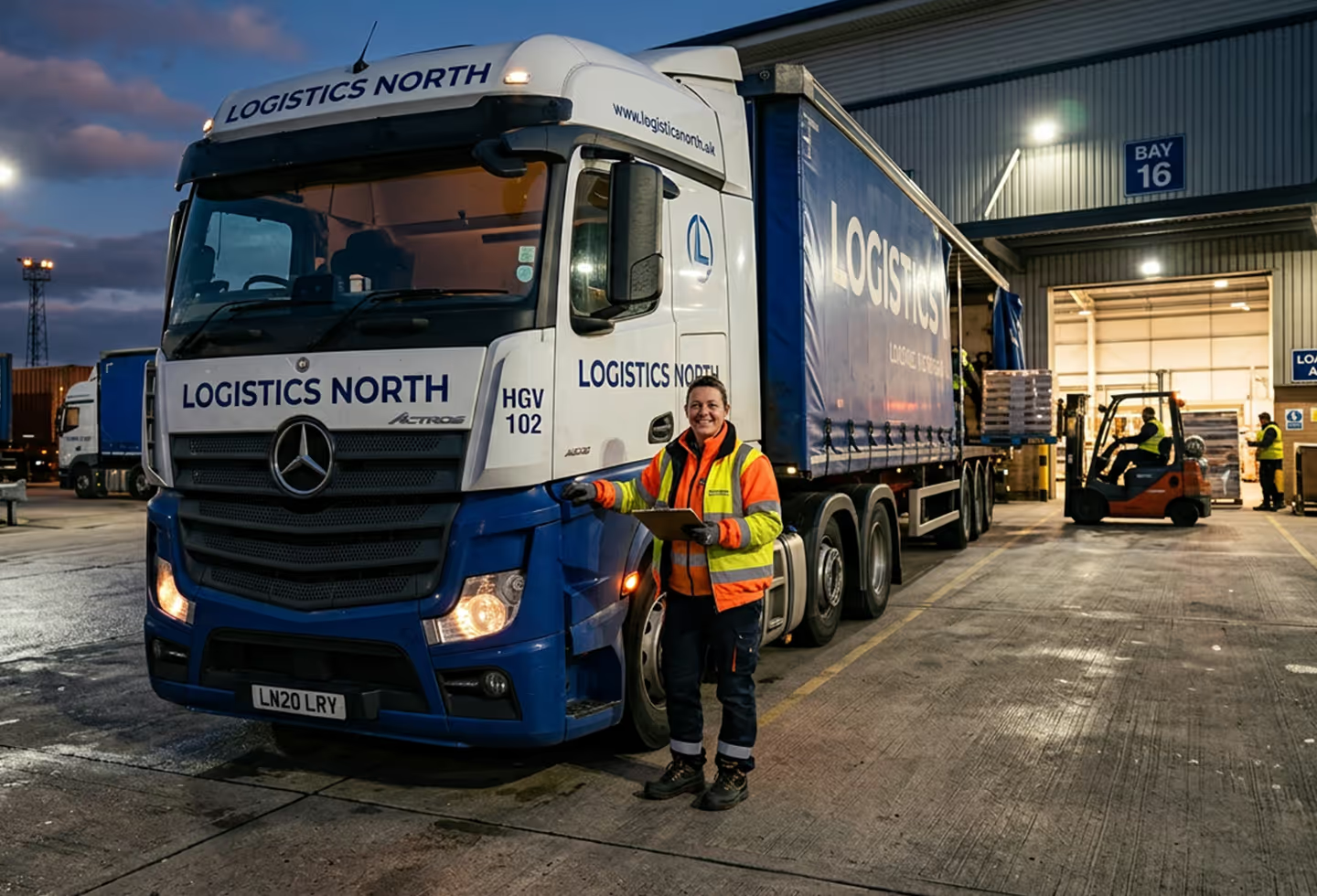
Expert driver training for your team.
Comprehensive audits and compliance checks.
FORS, ISO, and risk management guidance.


